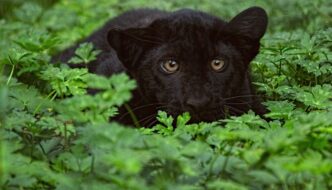
The black panther, a creature shrouded in mystery and splendor, piques the curiosity of adults and children alike with its sleek, dark fur and powerful presence. Often referred to as the 'ghost of the forest', black panthers are not a distinct species but rather dark-colored variants of leopards or jaguars, fascinating for their unique pigmentation and incredible adaptability. In the depths of the jungle's embrace or the tangled canopy of trees, these majestic cats move with stealth that belies their size, their melanic coats rendering them nearly invisible in the dappled light of their natural habitat. Black panthers are respected among the big cats for their strength and agility, and their ability to adapt to various environments highlights their resilience in the wild. Understanding these elusive creatures enriches your knowledge of nature's complexities, offering insights into the lives of one of the most iconic animals of the wild. Revealing surprising abilities, such as … [Read more...]
Whale Facts: Discovering the Giants of the Ocean
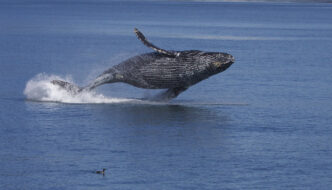
Whales are the largest animals on Earth, holding many secrets beneath their massive frames and the ocean waves. These gentle giants come in various species, each with unique features, behaviors, and habitats. As you explore the world of the underwater giant, you'll discover fascinating whale facts about their lives, from the way they communicate with each other using sounds to how they dive deep into the ocean for food. Understanding whales begins with recognizing the two main types: toothed and baleen. Toothed whales, like the cunning orca, use their teeth to catch their prey, whereas baleen whales, including the colossal blue whale, filter-feed on small aquatic organisms using baleen plates in their mouths. You'll be amazed to learn about the diverse diets of these giants and the ingenious methods they employ to locate and capture their meals. Life in the ocean dictates that whales must surface regularly to breathe, despite being mammals like us. Witnessing a whale breach the … [Read more...]
Freshwater Ecosystems: Insights into Aquatic Habitats

Freshwater ecosystems are dynamic environments where you can witness a complex interplay of biological diversity and physical characteristics. They include lakes, rivers, ponds, streams, and wetlands, supporting an array of life forms from microscopic organisms to large fish and mammals. These ecosystems are essential for the health of our planet, providing water for drinking, agriculture, sanitation, and habitat for countless species. Approximately just 3% of the water on Earth is fresh water, with a significant amount locked away in glaciers and ice caps. What remains accessible in rivers, lakes, and underground aquifers is vital not only to the organisms living within these habitats but also to humans, who depend on fresh water for virtually every aspect of life. The health and stability of freshwater ecosystems are therefore crucial, a topic that has garnered increasing attention due to pollution, habitat destruction, and water usage stresses. Diving into the world of … [Read more...]
Serous Membrane: Understanding Your Body’s Silky Linings

The serous membrane is a vital part of your body's structure, offering both protection and functionality to various organs. This dual-layered membrane secretes serous fluid, facilitating the frictionless movement between tissue surfaces. You can find serous membranes in several key locations within your body, serving as linings for cavities that don't open directly to the outside. Examples of serous membranes include the pericardium, which encases your heart; the pleura, surrounding your lungs; and the peritoneum, which encompasses the abdominal cavity. Each of these membranes plays a pivotal role in the smooth operation of your body's systems, providing lubrication to prevent friction and potential damage during organ movement. These examples illustrate the serous membrane's essential contribution to maintaining your physiological integrity. Basic Structure of Serous Membranes Serous membranes are vital components in your body that line cavities not open to the outside … [Read more...]
Science Fair Projects Hypothesis: Crafting a Winning Proposal

Crafting a solid science fair projects hypothesis is a critical step in the scientific process as you prepare your projects and ideas. A hypothesis is essentially your educated guess about what will happen in your experiment based on current knowledge and previous research. It provides a clear direction for your study, allowing you to make predictions that can be tested through experimentation. Understanding the importance of a hypothesis will not only guide your experimentation but also illuminate the thought process that scientists use to explore questions and seek answers. Whether your hypothesis turns out to be correct or not, it forms the foundation of a methodical inquiry, setting the stage for gaining new insights or understanding why an experiment yielded unexpected results. Your ability to formulate a testable hypothesis can impress science fair judges as much as your experimental results. It showcases your grasp of the scientific method, the diligence with which … [Read more...]
Worm Life Cycle: Understanding the Stages of Worm Development

Earthworms are fascinating creatures that have been around for millions of years. They play a crucial role in maintaining soil health and are often used in composting to break down organic matter. The worm life cycle is an interesting process that involves several stages. The life cycle of an earthworm starts with an egg that is encased in a cocoon. Within the egg, a young earthworm develops until it is ready to hatch. Once hatched, the earthworm goes through several stages of development before becoming a mature adult. During this time, the earthworm will shed its skin several times, with each new skin being larger than the last. As the earthworm grows, it will begin to develop reproductive structures, and after several months, it will become a mature adult. Adult earthworms are important for maintaining healthy soil as they help to aerate the soil and break down organic matter. They can live for several years and will continue to reproduce throughout their lifetime. … [Read more...]
- « Previous Page
- 1
- …
- 6
- 7
- 8
- 9
- 10
- …
- 23
- Next Page »

What Visiters Had To Say