Kagan teaching strategies revolutionize the way you interact with your students and structure your classroom dynamics. Developed by Dr. Spencer Kagan and his associates, these strategies emphasize cooperative learning, allowing students to work together to complement each other’s strengths and improve upon weaknesses. Instead of traditional competitive models, Kagan’s cooperative learning structures foster engagement and improve communication skills among all students, not just the most outspoken.

With this approach, you can expect a more inclusive classroom where each student is valued and has the opportunity to contribute. Kagan Teaching Strategies are diverse and dynamic, ranging from simple techniques such as Think-Pair-Share to more complex structures like Jigsaw, enhancing students’ learning experiences across various subjects and grade levels.
These methods have been shown to boost student confidence, foster a positive classroom environment, and promote a deeper understanding of the content.
By integrating Kagan Strategies, you are equipping your students with essential 21st-century skills such as collaboration, problem-solving, and critical thinking. You will notice not only an improvement in academic performance but also in interpersonal relationships and classroom behavior, providing every student with a fair chance to succeed and thrive in today’s fast-paced, interconnected world.
Fundamentals of Kagan Teaching Strategies
Kagan Teaching Strategies focus on structured teamwork and classroom engagement, which can be transformative for your teaching practices. Dr. Spencer Kagan developed these strategies to facilitate cooperative learning, and they operate on several key principles.
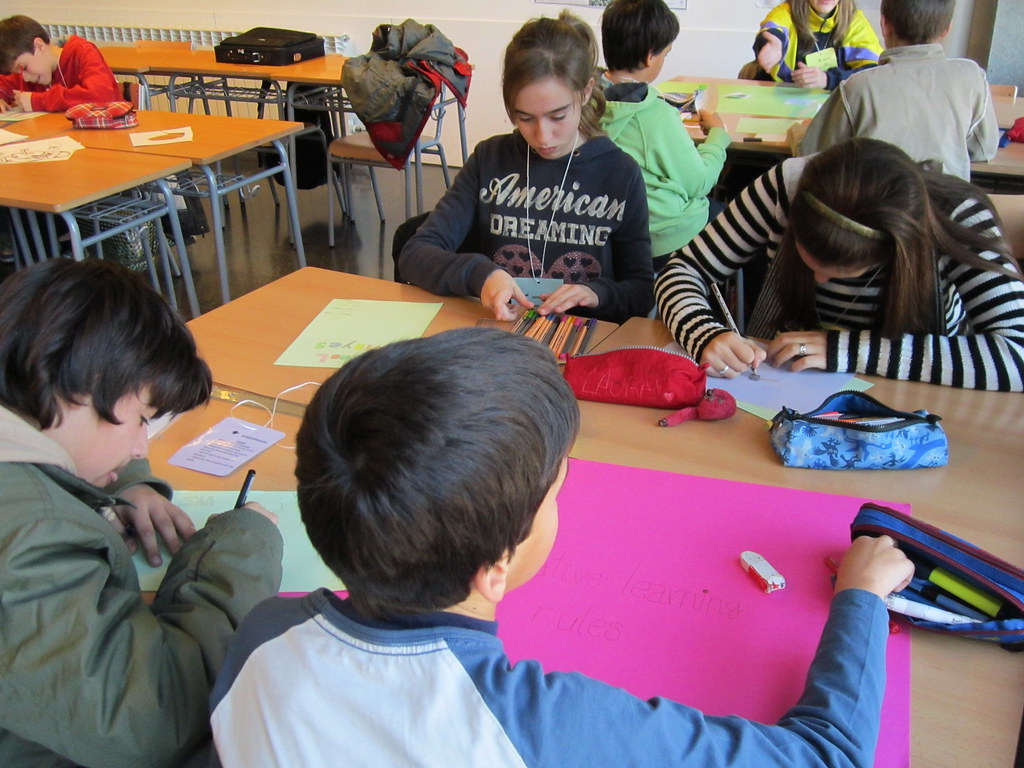
Cooperative Learning: You will shift from traditional teaching methods to a cooperative learning structure. By doing so, you encourage students to interact with each other, learn together, and support each other’s academic growth.
P.I.E.S. Principles: P.I.E.S. stands for Positive Interdependence, Individual Accountability, Equal Participation, and Simultaneous Interaction. When implementing Kagan Strategies, make sure that your activities incorporate these elements to maximize student engagement and learning outcomes.
- Positive Interdependence: Your students must see and feel their success linked to that of their peers.
- Individual Accountability: Ensure each student is responsible for their part of the task.
- Equal Participation: Design tasks so that all students participate equally.
- Simultaneous Interaction: Create opportunities for multiple students to interact at the same time.
Below is a table summarizing the primary structures that are most often used in Kagan Teaching Strategies.
| Structure | Purpose |
|---|---|
| Think-Pair-Share | Reflection and peer-to-peer sharing |
| RallyRobin | Alternating responses in pairs |
| RoundRobin | Sequential sharing in a group |
| Numbered Heads Together | Group problem-solving with accountability |
By using Kagan Strategies, you can also aim to enhance social skills, and foster inclusivity in your classroom. The approach encourages cross-racial and cross-cultural friendships, making your classroom a harmonious learning environment.
Structures for Cooperative Learning
Kagan strategies emphasize student engagement and cooperative learning. Understanding these structures equips you to enhance classroom interaction and learning outcomes.
PIES Principles
To ensure the effectiveness of cooperative learning, Kagan Strategies are underpinned by PIES Principles. These are four key foundations: Positive Interdependence, Individual Accountability, ensuring everyone’s Equal Participation, and simultaneous Social Skills development.
Team Formation
Team Formation is strategic in Kagan Cooperative Learning. Your role is to form diverse groups, where students with varied abilities, backgrounds, and perspectives can support one another and maximize the group’s potential.
Classroom Management
Successful Classroom Management within the Kagan framework means organizing physical space for easy movement and interaction. Establishing clear norms and roles helps to manage transitions and maintain a focused learning environment.
Pair Structures
Pair Structures like Think-Pair-Share and RallyRobin facilitate one-on-one peer discussion and reflection. These structures promote equal opportunity for students to share their thoughts and strengthen their understanding of the subject matter.
Timed Pair Share

In a Timed Pair Share, you allocate a specific time for each student to share their ideas uninterrupted. This structure levels the playing field, ensuring that all voices are heard, and thoughts are respected.
Implementation and Classroom Dynamics
Incorporating Kagan Strategies within your classroom hinges upon understanding not only the theoretical framework but also the practical applications that influence dynamics and student interactions.
Student Engagement
When you implement Kagan Strategies, expect to see your students taking an active role in the learning process. The cooperative learning techniques such as “Think-Pair-Share” foster an environment where every student becomes involved and has a voice. This hands-on approach can significantly improve overall class participation and maintain students’ attention.
Accountability Measures
You must establish clear expectations for individual and group work. Accountability is critical, and structures like “Numbered Heads Together” ensure that each student is responsible for their part in the learning process. Use progress tracking charts and peer assessments to monitor contributions, ensuring that everyone is held accountable and no one is left behind.
Group Autonomy
Granting groups a sense of autonomy encourages students to take ownership of their learning. Design activities where students have options to choose topics or methods of engagement to lead their discussions and projects. This autonomy builds confidence and fosters a cooperative environment that values student input.
Skills Development
Kagan Strategies focus on enhancing a range of skills from academic to social. As you apply these strategies, emphasize the development of communication, critical thinking, problem-solving, and collaboration skills.
The “Jigsaw” technique is particularly effective in promoting the mastery of these skills as each student becomes an expert in one part of a lesson and then shares that knowledge with their group.
Kagan Structures for Different Subjects
Kagan Structures offer a means to engage students across different subjects through cooperative learning strategies. These structures facilitate interactions among students and aim to improve both learning outcomes and social skills.
Mathematics
For Mathematics, the use of Numbered Heads Together encourages team-based problem-solving where each member contributes to solving complex equations. The RallyCoach structure allows pairs to alternate between solving problems and coaching each other, which can be particularly effective for peer-reinforcement of mathematical concepts.
Language Arts
In Language Arts, structures like RoundRobin are employed to share and expand creative ideas. For instance, during a poetry unit, you may use RoundTable for brainstorming metaphors, where each student in a group adds one idea at a time, deepening their understanding of literary devices.
Science

Science subjects benefit from the exploratory nature of Think-Pair-Share, allowing students to discuss hypotheses before a lab activity. The Send-a-Problem structure, where students pass a problem around in a group to gather multiple methods of solution, can be effective in scientific problem solving.
Social Studies
For Social Studies, the Jigsaw method is ideal for dividing complex topics like historical events into sections for groups to research, learn, and teach to their classmates. Fan-N-Pick can be used to review key concepts or to debate different perspectives on social issues, encouraging students to engage with the material actively.
Assessment and Evaluation of Kagan Strategies
Evaluating Kagan Strategies involves looking at how effectively these strategies enhance student engagement and learning outcomes, as well as how teachers can incorporate feedback for continuous improvement.
Effectiveness Metrics
Your assessment of Kagan Strategies should be grounded in specific metrics such as academic performance, student engagement levels, and social skill development. Through researching Kagan
Strategies, you’ll find that they are designed to foster cooperative learning which can be measured by improved academic performance and enhanced interpersonal skills among students.
- Academic Performance: Track and compare test scores before and after implementation.
- Engagement Levels: Observe and record instances of active participation during group activities.
- Social Skills: Evaluate the progress in student collaboration and communication abilities.
Feedback Mechanisms
Feedback mechanisms are essential to understand the effectiveness and pinpoint areas for refinement in Kagan Strategies. You can gather qualitative feedback through self-assessments and peer reviews within cooperative learning structures to gauge the individual and collective experiences of the students.
- Self-Assessments: Encourage students to reflect on their contributions and learning.
- Peer Reviews: Facilitate a process where students can give constructive feedback on group interactions.
Continuous Improvement
The continuous improvement of Kagan Strategies hinges on regular analysis and modification based on feedback and effectiveness metrics. Teachers should periodically review both academic and engagement metrics to adjust strategies for optimal results.
Professional development and sharing best practices among educators can lead to an enhanced application of Kagan Structures.
- Analyze Results: Examine data trends from effectiveness metrics to guide improvements.
- Professional Development: Stay informed on the latest research and techniques in cooperative learning.
Professional Development and Training
Professional development in Kagan Strategies equips you with the knowledge and skills to effectively foster cooperative learning in your classroom. Through structured training, you gain a deeper understanding of how to implement these methods to enhance student engagement and achievement.
Workshops and Certificates
Workshops are foundational to your professional growth in Kagan Strategies. These sessions are designed to offer hands-on experience, allowing you to practice and master various Kagan Structures.
After completing a workshop, you have the opportunity to earn certificates, signifying your proficiency in applying these teaching strategies. View available workshops and certification details on Kagan Publishing & Professional Development.
Teacher Collaboration
Teacher collaboration is a vital component of the Kagan Strategies training model. During professional development sessions, you engage with peers to exchange experiences and insights, fostering a community of continuous learning and support.

This teamwork not only reinforces the cooperative learning you facilitate in your classroom but also builds a network for sharing best practices.
Ongoing Support
Ongoing support is crucial for your sustained success with Kagan Strategies. Training doesn’t end with the initial workshops; you receive continuous support in the form of follow-up materials, online resources, and access to coaching.
This ensures that you are never left without guidance and can always find fresh ways to improve your teaching methods. For further information on obtaining support, browse the options on Teaching Strategies.
Challenges and Solutions
Implementing Kagan Strategies in the classroom is proven to enhance student engagement and learning outcomes. However, educators often encounter specific challenges that require thoughtful solutions.
Classroom Heterogeneity
Your classroom comprises a diverse group of students with varying abilities and backgrounds. Kagan Strategies require careful structuring to ensure that all students are equally included and can contribute effectively.
- Pairing advanced students with those who need more support, not only to facilitate peer learning but also to foster cross-race and cross-ability friendships.
- Creating diverse groups: Ensure each group reflects the classroom’s diversity, enabling students to learn from different perspectives.
Resistance to Change
You may find resistance amongst staff or students when introducing these strategies. To minimize this:
- Start small: Introduce one or two structures at a time to gradually acclimate your students and colleagues to this method of learning.
- Offer training sessions and workshops for teachers to become more comfortable and proficient with Kagan Structures.
Adapting to Different Learning Styles
Every student learns differently, which can make it challenging to apply a singular set of strategies across the board.
- Utilizing a variety of Kagan Structures that cater to different learning styles, from kinesthetic to visual learners.
- Encouraging self-reflection among students to understand which activities they benefit from the most and modifying your approach accordingly.
Research on Kagan Teaching Strategies
In the field of education, Kagan Teaching Strategies attract considerable interest for their potential to enhance both academic and social outcomes. Distinct research highlights the impact of these strategies on educational performance, social skills development, and long-term academic and interpersonal benefits.
Educational Outcomes
Evidence suggests that when you engage students with Kagan Structures, like Think-Pair-Share and RoundRobin, academic achievement tends to rise. A study accessible through Kagan’s online articles emphasizes the integration of principles proven to improve academic results.
Another report found in the Eric Educational Resources confirms that these structures can better engage students compared to traditional teaching methods.
Student Social Skills
Kagan Strategies are not only about academics; they also foster social competence. By promoting cooperative learning, students have the opportunity to improve their communication abilities and resolve conflicts constructively. Success stories from teachers demonstrate that students learn to work together effectively, enhancing their teamwork and leadership skills.
Long-Term Impact
Research on the long-term impact of Kagan Teaching Strategies suggests continuous advantages beyond the classroom. The regular practice of these structures helps establish an inclusive classroom climate, potentially leading to lasting positive relationships and a supportive school environment.
These outcomes are substantiated by classroom evidence presented by Kagan Publishing, highlighting improvements not just in grades but also in student confidence and cooperation.
Frequently Asked Questions
In this section, you will find targeted inquiries related to Kagan strategies, offering concrete applications for enhancing classroom instruction and student interaction.
What are some effective Kagan strategies for enhancing math instruction?
For math instruction, strategies like Numbered Heads Together and Quiz-Quiz-Trade facilitate collaboration and ensure active participation, effectively reinforcing math concepts and problem-solving skills.
How does Kagan classroom management differ from traditional methods?
Kagan classroom management focuses on structuring positive interdependence among students, in contrast to traditional methods that often rely on individual competitiveness. This approach promotes equal participation and reduces discipline issues.
How can the Rally Robin strategy be implemented in a lesson plan?
Implementing the Rally Robin strategy involves students taking turns with a partner to orally share answers or ideas, which can be incorporated into virtually any lesson plan to enhance student engagement and oral language practice.
What Kagan strategies are well-suited for social studies classrooms?
For social studies, strategies like Jigsaw and Find Someone Who support the discussion of historical events and societal issues by promoting information sharing and teamwork among diverse student groups.
Can you provide a list of Kagan structures for cooperative learning?
Certainly, cooperative learning structures include Round Robin, Think-Pair-Share, and Inside-Outside Circle, each designed to foster active engagement and collaborative learning.
What are the core principles underlying Spencer Kagan’s cooperative learning techniques?
The core principles of Spencer Kagan’s techniques include positive interdependence, individual accountability, equal participation, and simultaneous interaction—elements that together cultivate a cooperative and inclusive learning environment.

What Visiters Had To Say