
The name gymnosperm comes from a Greek word that means naked seeds. They are so named because the seeds are not enclosed in an ovary and instead are on the surface. Gymnosperms are plants that produce cones and seeds instead of flowers. Pine, spruce, fir, and ginkgos are all examples of gymnosperms. They often grow in temperate and boreal forests in wet or dry climates. Gymnosperms are the Oldest Type of Plant Gymnosperms date back to the Paleozoic era where they were an abundant plant. Today, there are about 700 to 900 living species. They are thought to be the first vascular plants on lade, and they first appeared about 245 million years ago. A plant’s vascular system allows water to move from the root to the rest of the plant. Without it, plants can not survive on land. However, the gymnosperm is thought to be the first vascular plant, and thus the first plant that could survive on land. How … [Read more...]
All About Hummingbirds and the Hummingbird Life Cycle

In this unit study, we will learn about hummingbirds and about their characteristics. Many people attract these small birds to their backyards because they are so unique. Hummingbirds are fun to watch, especially while they eat. People plant specific flowers and place hummingbird feeders in their yards to attract these birds in order to watch them for entertainment. What is a Hummingbird and What Do They Look Like? Hummingbirds are small wild birds. There are more than 300 species of hummingbirds in the world, and there’s a lot of variation between the species. Hummingbirds have a distinct physical appearance. They are so named because they make a humming noise when they fly because their wings move so quickly. Hummingbirds are only found in the Western Hemisphere. They are found as far north as Northern Canada and Alaska and as far south as South America. South America and Central American have more species than North … [Read more...]
The Best DIY Sensory Table Instruction Set and Ideas for Toddlers

Sensory bins are all the rage over Pinterest right now, and for good reason. They are a great way to develop your toddler's sensory and motor skills, and they're just plain fun! It's not just for toddlers, a lot of studies have shown that these are great for Autism spectrum people and even cognitive issues in older adults like with Alzheimer's or general dementia. Just. Wow. Why is sensory play important? Sensory bin play improves children's ability to learn limit/boundary situations (I could go on for hours, but basically a child needs to be able to tell the difference between what is harmful/dangerous and what is not) Provides something for them to do with their hands when they need it. As many parents know, kids have a tendency to put things in their mouths and sensory play helps redirect this behavior at the same time it works on their fine motor skills. What does DIY mean? DIY means Do It Yourself, so DIY sensory tables are simply doing you own thing instead … [Read more...]
Dissolving Peeps STEM for Kids: Experiment’s Design and Applications
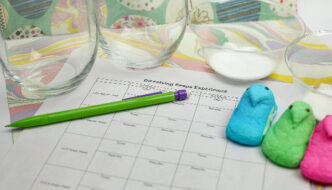
What could be more fun than dissolving peeps? If you are looking for a fun STEM experiment, then this is the one! My Dissolving Peeps STEM Experiment for Kids can be used to teach about chemistry. You will need some supplies: dissolvable peeps, salt, sugar, water, measuring cups or spoons, Peeps, and other materials like bowls or drinking glasses. The materials for this project are inexpensive, easy to find, and kid-friendly. You can use multiple colors of peeps in order to create your own unique design or follow our example below. History of Peeps Peeps are a candy introduced by the Just Born company, which has been making Easter confections since 1923. In 1953, Peeps were renamed PEEPS® and became an American icon for springtime celebrations. Today there are many different flavors of PEEPS including: Marshmallow Bunny (yellow), Pink Marshmallow Chick (pink), Chocolate Dipped Strawberry Rabbit( brown) & Traditional Yellow Marshmallow Chicken (white). What … [Read more...]
Bold and Beautiful: The Life Cycle of a Seahorse

The Life Cycle of a Seahorse? The seahorse is a small fish that has no scales and breathes through gills. Seahorses are the only type of fish in which the male becomes pregnant (by way of internal fertilization). While we don’t know for sure how they do this, it’s believed to be possible due to their ability to regrow their tails. This makes them one of the most unique fish in our world! Seahorses are commonly known for their unique appearance and slow swimming. They don’t move around in the ocean nearly as fast as other sea creatures. However, that isn’t the most interesting thing about them. Did you know that when seahorses are born, they’re all males? Life Cycle of a Seahorse While they start as males, some turn into females when the female population becomes smaller. It’s a strange and unusual thing that doesn’t happen with other creatures, but that’s what makes the average seahorse special! It’s essential to understand the life cycle of a seahorse and what they go … [Read more...]
The Dandelion Life Cycle and So Much More
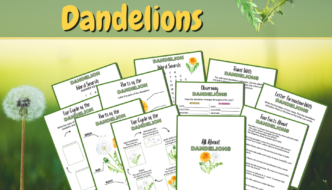
The dandelion's name comes from the French dents-de-lion, meaning lion's teeth, referring to the jagged-edged leaves shape of dandelions. Dandelions grow in temperate climates, preferring full sun and well-drained soil. Some dandelions can grow in wet soils, but some do much better in drier climates. Dandelion plants grow from a crown of leaves, and the flowers blossom on hollow flower stalks. The plant's leaves are bright green with jagged edges, similar to the shape of a lion's teeth. Dandelion is a common name for plants in the genus Taraxacum. There are dandelion species all over the world; some have yellow flowers, others have white. The dandelion is considered to be a wild plant, although it has been widely cultivated throughout Europe and North America as a food source or medicinal herb. In addition to the plants wide cultivation, it has many other uses. The root is used in dyes and its leaves are sometimes used as food for livestock. The history of the … [Read more...]
- « Previous Page
- 1
- …
- 8
- 9
- 10
- 11
- 12
- …
- 21
- Next Page »

What Visiters Had To Say